
Live & Virtual Indoor Cycling for Commercial Gyms
Combining live and virtual indoor cycling allows a gym to preserve the energy and coaching of instructor-led classes while using virtual sessions to extend the timetable when a live instructor is unavailable. The strongest model is not live versus virtual: it is one consistent platform in which riders experience the same training language, visual system and personalisation across both formats.
Written by Darren Lee, founder of CicloZone
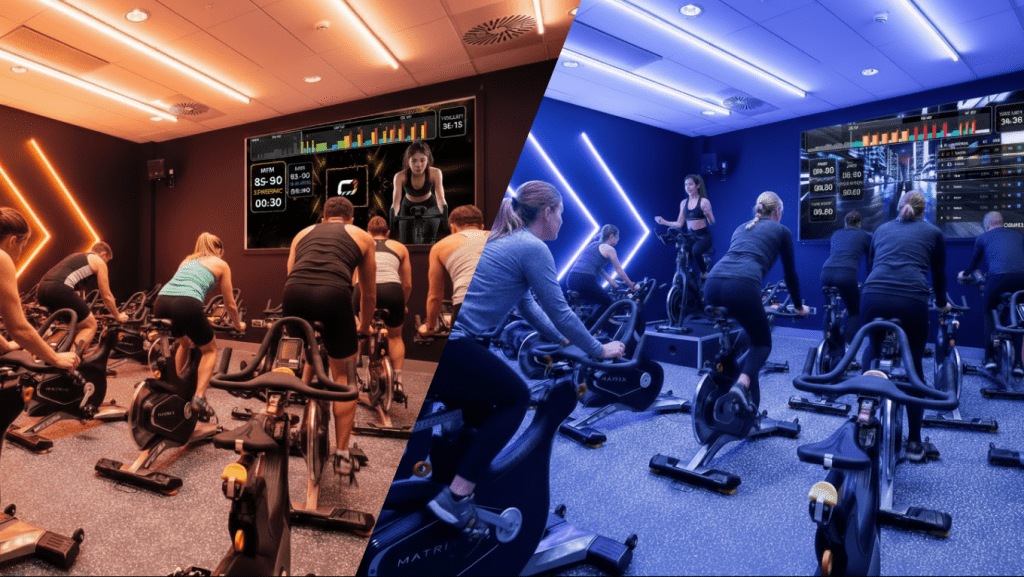
Why combine live and virtual cycling?
Live instructors remain one of the strongest assets in group exercise. They read the room, adapt coaching and create human connection. But an instructor-only timetable is constrained by recruitment, availability, holidays, sickness and the economics of quieter time slots.
Virtual classes can fill those gaps. They can make early mornings, off-peak periods and additional timetable slots viable without positioning virtual delivery as a replacement for a facility’s instructor team.
The problem with two disconnected experiences
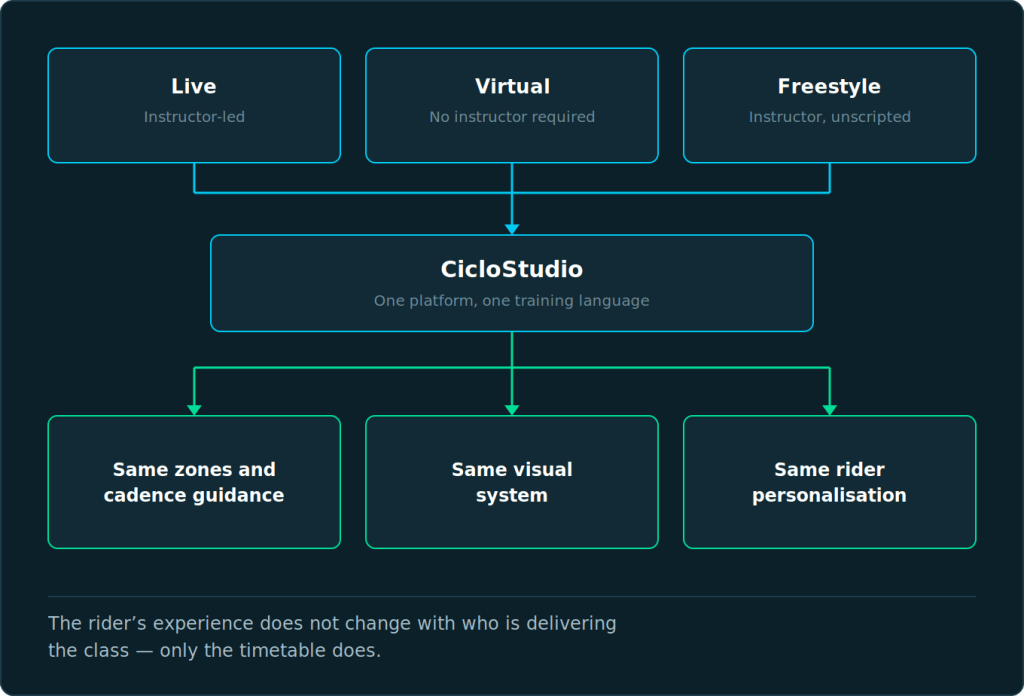
A common weakness is to treat live cycling and virtual cycling as separate products. Riders learn one visual language in live classes and encounter a completely different interface, training method or intensity system in virtual sessions. That increases friction and makes virtual classes feel like a secondary offering.
A unified platform can keep zones, cadence guidance, interval structure and rider personalisation consistent regardless of who is delivering the class.
How CicloStudio supports the hybrid timetable
CicloStudio is designed to support live instructor-led classes, virtual classes and freestyle sessions in the same connected environment. Riders can therefore use the same underlying performance framework across the timetable.
For operators, this creates a practical route to timetable expansion. High-demand periods can remain instructor-led, additional slots can be virtual, and instructors can use freestyle or structured profiles depending on the class objective.
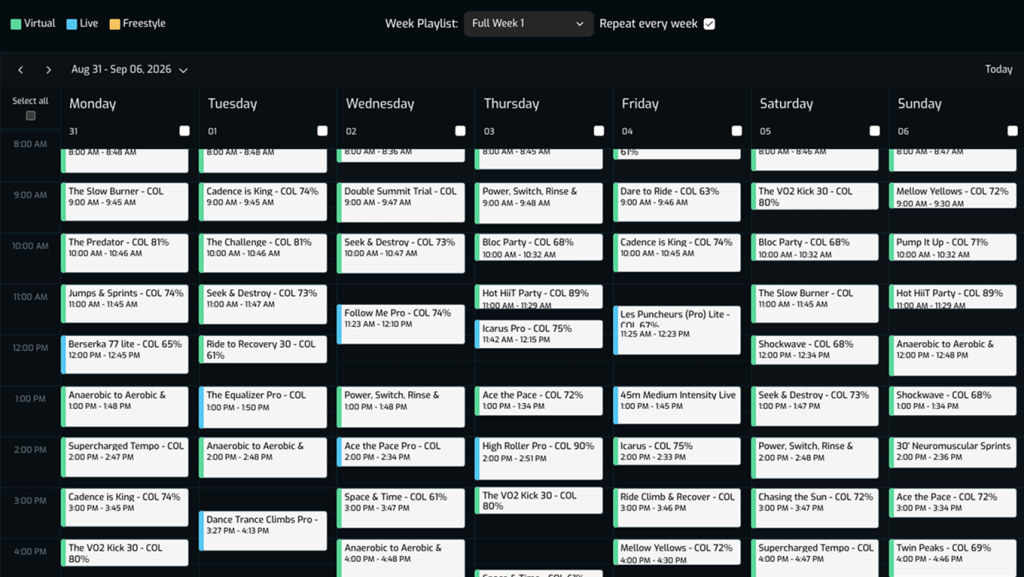
Virtual does not have to mean generic
A virtual cycling class can still be performance-led and individualised. The class provides the common structure and coaching, while rider-specific targets can reflect each participant’s capability. This is particularly important in a commercial gym where a single class may contain a first-time rider, a regular member and a trained cyclist.
Where virtual classes add the most value
Virtual delivery is particularly useful where the alternative is an empty studio: early mornings, late evenings, quieter daytime periods, instructor gaps and facilities where recruiting specialist cycling instructors is difficult. It can also provide timetable resilience when a live class would otherwise be cancelled.
How to introduce virtual cycling successfully
Virtual sessions should be presented as a deliberate part of the cycling proposition, not merely as emergency cover. Give them clear timetable slots, explain the format to members, make joining simple and use the same visual and training language as live classes. A short staff-led onboarding period can help members become confident with the experience.
Measure the right outcome
The relevant question is not whether a virtual class attracts exactly the same attendance as the busiest instructor-led class. Operators should measure whether previously unused studio hours generate participation, whether cancellations reduce, whether members gain more opportunities to ride and whether the overall cycling programme becomes more resilient.
Frequently asked questions
Are virtual cycling classes intended to replace instructors?
They do not need to. A hybrid model uses virtual delivery to complement instructor-led classes and expand the timetable.
Can riders receive personalised targets in a virtual class?
Yes. In a connected system, the class structure can be shared while performance guidance is individualised.
Can a gym run live and virtual classes on the same screen?
Yes, subject to the chosen studio configuration. CicloStudio is designed to support both formats within one platform.
When are virtual classes most useful?
They are particularly useful for off-peak hours, timetable expansion, instructor shortages and reducing cancellations.
Can instructors still create their own style of class?
Yes. CicloStudio supports structured and freestyle approaches so technology does not have to remove instructor creativity.