
How to Increase Indoor Cycling Studio Utilisation and ROI
Improving indoor cycling studio ROI starts with using the room more often and making each available class easier to deliver. The biggest levers are timetable coverage, instructor availability, member accessibility, equipment utilisation and differentiation. A hybrid connected model can combine live instructors with virtual classes so the studio remains productive beyond the limited hours when an instructor is available.
Written by Darren Lee, founder of CicloZone
The utilisation problem
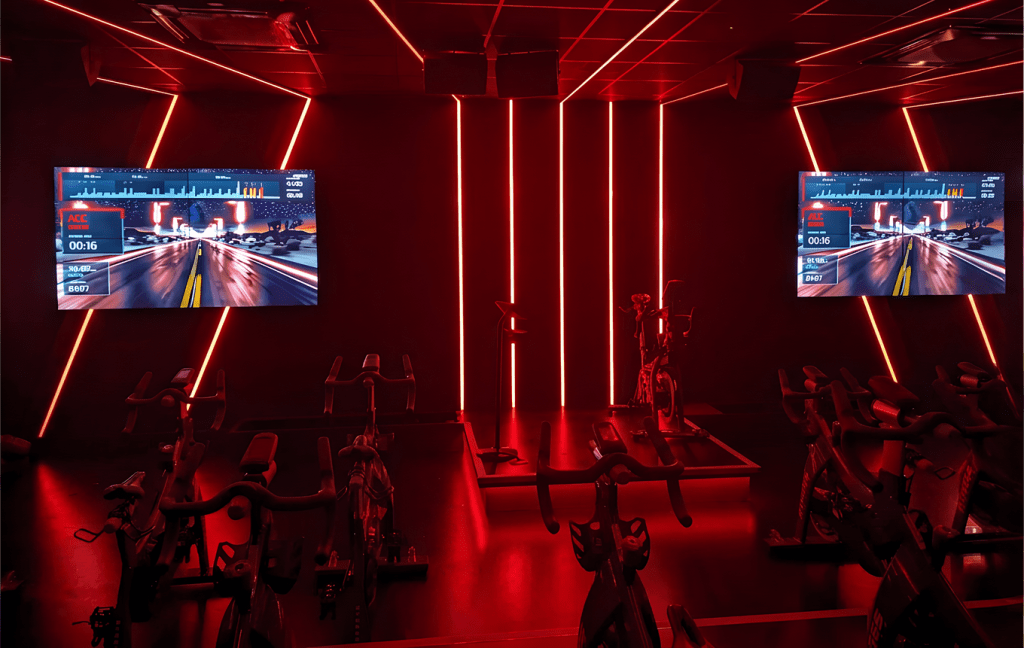
A dedicated cycling studio represents a significant investment in floor area, bikes, sound, lighting and staff. Yet many rooms are productive only during a relatively small number of instructor-led timetable slots. Outside those periods, the same assets may generate little or no member value.
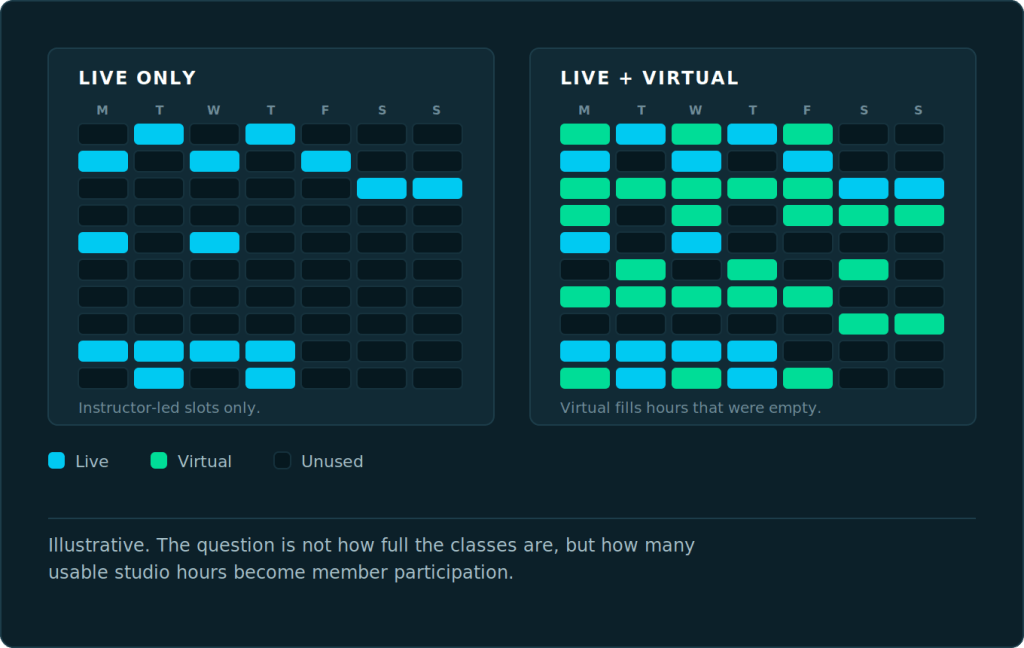
The first ROI question is therefore not simply ‘How full are our cycling classes?’ It is ‘How many usable studio hours are we converting into member participation?’
1. Extend the timetable without replacing the live programme
The strongest live classes should remain a central part of the proposition. Virtual delivery can then add sessions where instructor economics or availability make live delivery difficult. The incremental value comes from turning otherwise empty hours into bookable experiences.
2. Reduce the cost of cancellations and instructor gaps
A cancelled class creates more than a payroll problem. It damages timetable reliability and member confidence. A virtual option gives the facility a fallback and can also reduce the pressure to recruit a specialist instructor for every possible time slot.
3. Make the class accessible to more abilities
A class that feels designed only for experienced riders narrows its potential audience. Connected personalisation allows one shared workout to generate different targets for different riders. This can make the same timetable slot relevant to beginners, regular exercisers and performance-oriented members.
4. Extract more value from the existing bike fleet
Digital transformation does not automatically require new bikes. Where existing equipment is compatible or can be appropriately instrumented, retaining the fleet can materially improve the economics of a connected upgrade. Capital can then be focused on the parts of the experience that members actually perceive.
5. Give instructors better tools, not more administration
Technology should help instructors create repeatable, high-quality classes and communicate intensity clearly. If the system is too complicated to operate during a live class, adoption suffers. A successful rollout therefore includes instructor education and a workflow that is simple enough to become routine.
6. Create reasons for members to return
Progress information, individualised targets, varied class profiles, challenges and continuity between live and virtual sessions can give members a clearer sense of progression. Retention is ultimately more valuable than novelty; the digital layer should support a cycling habit rather than exist only as a visual effect.
What should a gym measure?
Useful metrics include cycling-studio hours available, hours programmed, sessions delivered, cancellations, attendance per session, total weekly riders, repeat participation, live-versus-virtual utilisation and member feedback. Operators should establish a baseline before launch so the effect of timetable and technology changes can be measured rather than assumed.
Where CicloStudio fits
CicloStudio combines live, virtual and freestyle cycling with connected rider performance and flexible studio configurations. The commercial objective is to help operators create more usable timetable hours, deliver a consistent cycling methodology and add a connected layer without automatically requiring wholesale replacement of existing studio assets.
Frequently asked questions
How do you calculate indoor cycling studio utilisation?
A useful starting point is delivered or occupied studio hours divided by the total hours the studio could realistically be programmed, supplemented by attendance and repeat-participation measures.
Can virtual cycling improve studio ROI?
It can improve utilisation when virtual sessions create participation during hours that would otherwise remain unused or reduce cancellations caused by instructor availability.
Should virtual classes replace live instructors to save money?
Not necessarily. A hybrid model can protect strong live classes while using virtual delivery where it adds timetable coverage or resilience.
Is new equipment always required for connected cycling?
No. Existing bikes and studio infrastructure may be reusable depending on compatibility and condition.
What should we measure before installing a connected system?
Record current timetable hours, delivered sessions, cancellations, attendance, repeat riders and the hours when the room is unused. This creates a baseline for evaluating the change.