
Indoor Cycling Software for Commercial Gyms & Fitness Studios
Indoor cycling software for commercial gyms should do more than play a workout on a screen. It should connect riders and compatible bikes, individualise training intensity, support instructors, deliver live and virtual classes and fit into the way a commercial studio actually operates. CicloStudio combines these functions in one connected cycling platform.
Written by Darren Lee, founder of CicloZone
What does indoor cycling software do?
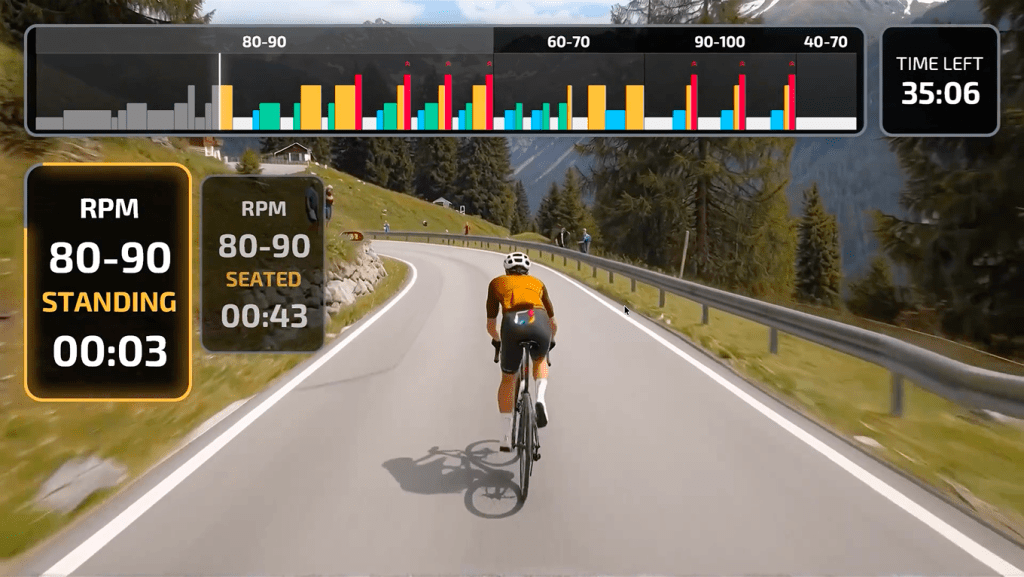
Commercial indoor cycling software sits between the physical studio and the class experience. It can receive bike or rider data, organise a workout into intervals, communicate cadence and intensity targets, display class progress, support instructor controls and record rider performance.
The best solution for a commercial facility is therefore not necessarily the app with the most features. It is the one that makes the studio easier to operate while giving riders a clearer, more individualised and more engaging experience.
What should a commercial system include?
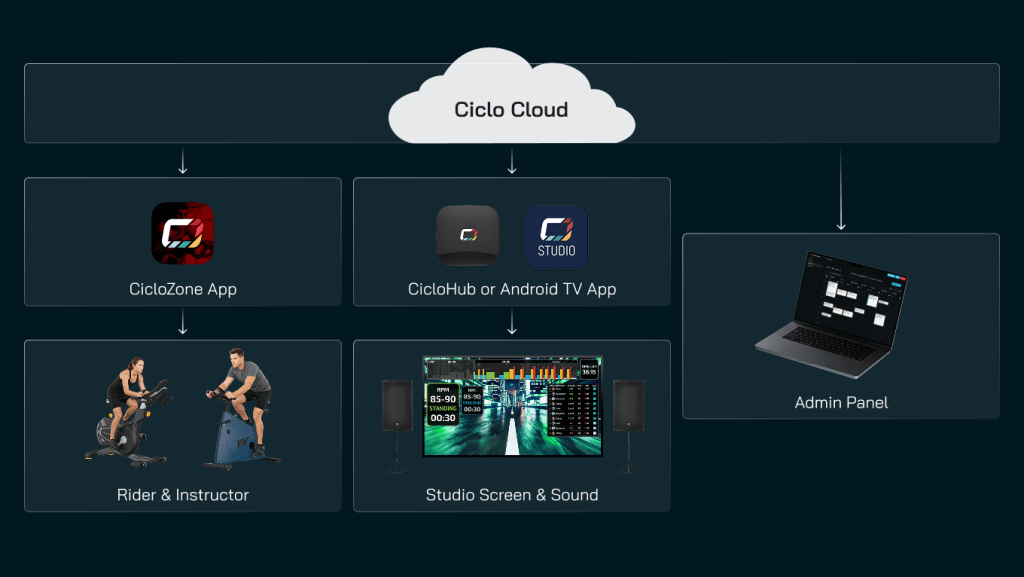
For a gym or studio, connected cycling should solve operational as well as training problems. The core requirements are bike connectivity, rider identification, individualised intensity, instructor control, clear studio visualisation, live and virtual content, simple scheduling and a practical installation model.
Commercial operators should also consider whether a system requires a complete bike replacement, whether it can work with their existing screen and sound infrastructure, how riders join a class, how instructor training is managed and whether the same rider experience continues between instructor-led and virtual sessions.
Consumer cycling apps and commercial studio software are different
Consumer indoor cycling applications are generally designed around one rider, one account and one screen. A commercial group cycling room has different requirements: multiple simultaneous riders, mixed abilities, instructor control, fast class joining, shared visualisation, timetable continuity and equipment that may already be installed.
When evaluating software, operators should ask whether it was designed for a group exercise environment rather than assuming a successful home-training application will translate directly into a commercial studio.
The essential software functions for a gym
A practical commercial platform should make class setup fast, show riders what to do next, translate performance data into understandable coaching information and give instructors enough control without turning them into technicians. It should also support virtual delivery so the room is not dependent on an instructor being physically available for every scheduled class.
For multi-use facilities, simple installation and hardware flexibility are equally important. Software that demands a closed hardware ecosystem can turn a digital upgrade into a major capital project.
CicloStudio as a commercial cycling platform
CicloStudio is built around the commercial studio use case. It combines connected rider performance, structured class profiles, instructor-led delivery, virtual content, freestyle classes, studio scheduling and rider participation through the CicloZone ecosystem.
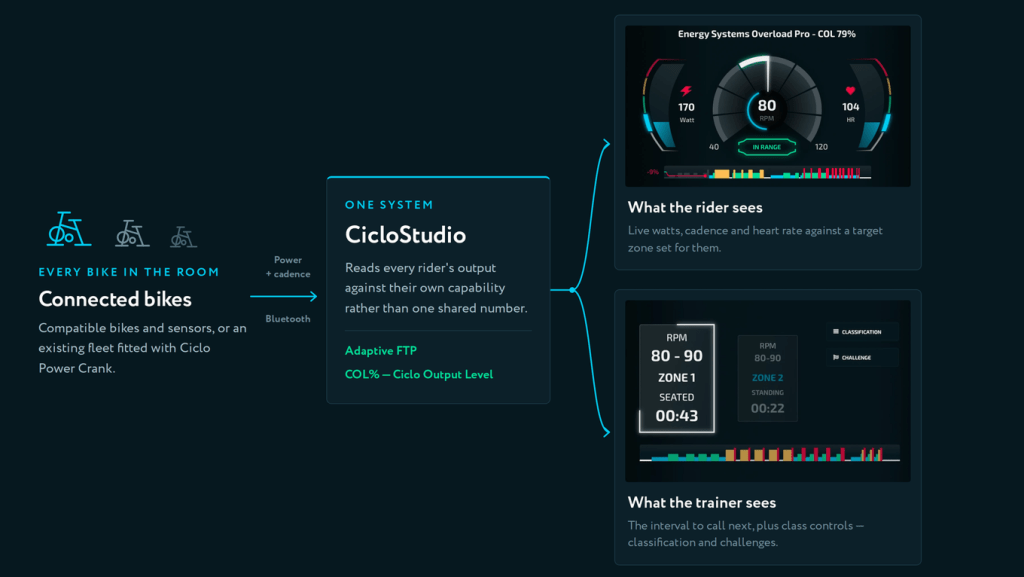
Power and cadence information are used to make the workout meaningful to each rider. Adaptive FTP provides an evolving reference for individual power targets, while COL% provides a relative measure of class output that can support inclusive group feedback and competition.
What the trainer sees versus what the rider sees
The instructor needs a simple operational view: the current interval, target zone, cadence, timing and class controls. Riders need personal information that tells them how hard they should work and whether they are achieving the interval objective. A studio screen can add collective visualisation and challenges without requiring every rider to produce the same absolute output.
Separating these roles is important. Good studio software reduces cognitive load for the instructor rather than adding another dashboard that competes with coaching, music and room management.
Software should protect the investment already in the studio
Many operators already own a viable fleet of indoor cycles, a sound system and a display or projector. The commercial case for software is stronger when those assets can remain useful. CicloStudio is designed for flexible configurations, including compatible Bluetooth bikes and supported connectivity hardware, so operators can assess a digital upgrade before considering wholesale bike replacement.
Frequently asked questions
What is indoor cycling studio software?
It is software designed to manage and deliver group indoor cycling experiences, including workout profiles, rider guidance, connected performance data, instructor controls and often live or virtual content.
Is commercial cycling software the same as a home cycling app?
No. Commercial software must handle multiple riders, instructors, rapid class turnover, shared displays and operational requirements that do not normally exist in a single-user home setup.
Can indoor cycling software use power data?
Yes. Compatible bikes and sensors can provide power and cadence data, which software can translate into personalised targets and feedback.
Can CicloStudio run without a live instructor?
Yes. Virtual class delivery is part of the CicloStudio ecosystem.
Can instructors create their own classes?
CicloStudio includes content-creation tools for building structured class profiles, alongside its virtual and live delivery options.