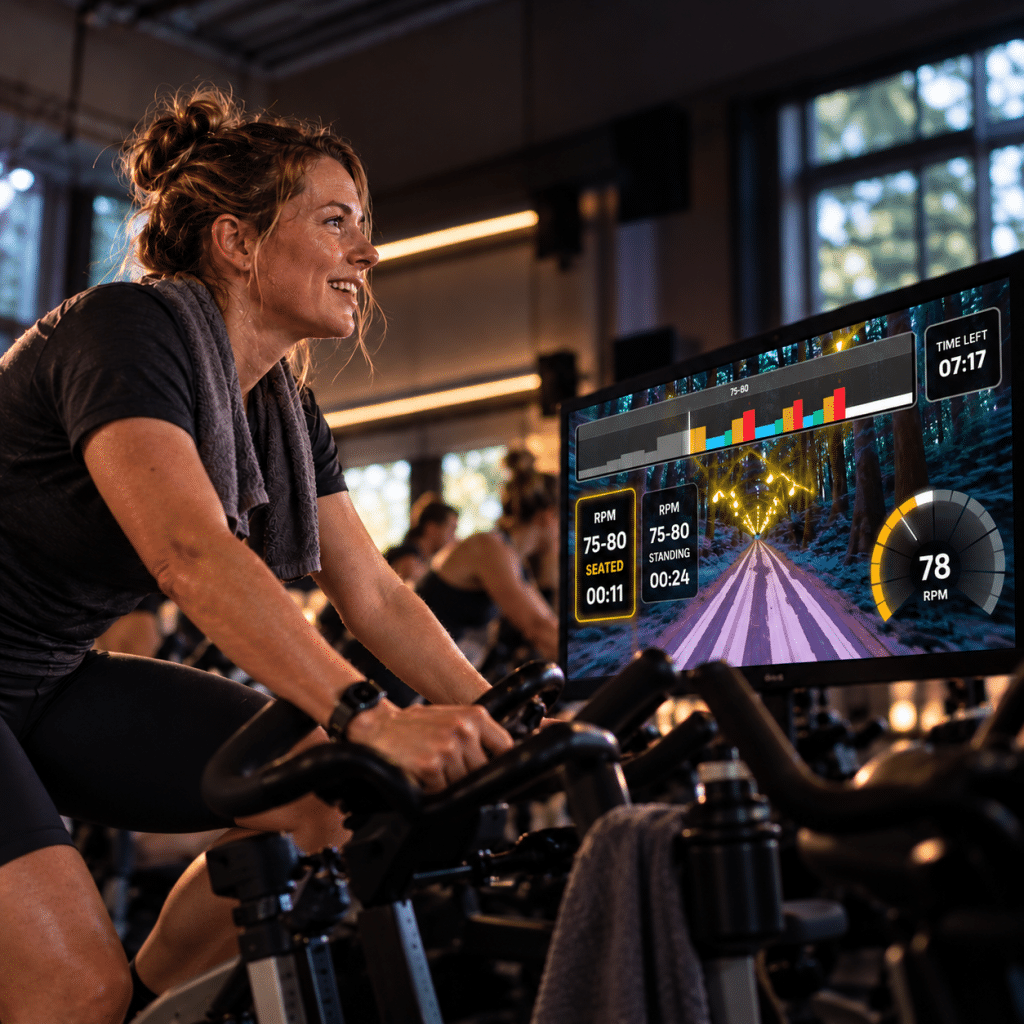
Why the science of healthy ageing is giving us even more reasons to keep pedalling — and why how we train may be just as important as how often.
For decades, we’ve understood that cycling is good for our hearts, lungs and muscles. It improves cardiovascular fitness, helps manage body weight and keeps us physically active well into later life.
But emerging research is revealing something potentially even more important: the connection between strong legs, regular cycling and the long-term health of our brains.
Scientists are increasingly discovering that the benefits of exercising our largest muscle groups extend far beyond physical fitness. From improved circulation and metabolic health to chemical signalling between muscles and the brain, the evidence suggests that staying active could play a meaningful role in reducing our risk of cognitive decline and dementia.
And for those of us who love cycling, whether outdoors or in an indoor cycling studio, that’s an exciting prospect.
The Remarkable Connection Between Leg Strength and Brain Health
One particularly interesting study, published in 2015, followed older female twins over a ten-year period.
Researchers discovered that women with greater leg power at the beginning of the study generally experienced less cognitive decline over the following decade. Greater leg power was also associated with healthier brain structure.
The findings were especially interesting because studying twins helped researchers account for some shared genetic and environmental influences.
This doesn’t mean that stronger legs automatically prevent dementia. However, it does suggest that the condition of our lower-body muscles may be an important indicator of how well our brains age.
Our legs contain some of the largest and most metabolically active muscles in the body. When we exercise them, we’re doing far more than producing movement.
We’re stimulating cardiovascular circulation, improving glucose regulation and activating biological signalling pathways that may influence brain health.
Researchers are particularly interested in substances associated with exercise, including brain-derived neurotrophic factor (BDNF), which supports learning, memory and neuronal function.
In simple terms, exercising our muscles may help create conditions that support a healthier brain.
The Cycling Research Is Particularly Encouraging
In June 2025, a major study published in JAMA Network Open examined nearly 480,000 UK Biobank participants over a median follow-up period of approximately 13 years.
The researchers investigated the relationship between different modes of transport and subsequent dementia diagnoses.
Their findings were significant.
Compared with non-active transport, cycling or mixed cycling was associated with:
– 19% lower relative risk of all-cause dementia
– 22% lower relative risk of Alzheimer’s disease
– 40% lower relative risk of young-onset dementia
– 17% lower relative risk of late-onset dementia
Researchers also identified an association between cycling and greater hippocampal volume — particularly interesting because the hippocampus plays a crucial role in memory and learning.
These figures represent associations rather than proof that cycling directly prevented dementia. Nevertheless, the scale and duration of the study make the findings difficult to ignore.
Other international research has reached similarly encouraging conclusions about physical activity generally, with large population studies consistently associating regular recreational exercise with lower dementia risk.
Why Do So Many Older Cyclists Seem to Age So Well?
Anyone involved in cycling will have encountered riders in their sixties, seventies or even eighties who demonstrate remarkable physical ability.
Many continue to ride substantial distances, maintain excellent cardiovascular fitness and remain mentally engaged with their sport.
Research involving lifelong recreational cyclists aged 55–79 has found that some aspects of their immune function appear better preserved than in less-active older adults.
This doesn’t establish that lifelong cyclists are immune to dementia, nor do we have reliable evidence that dementia is exceptionally rare among them.
But it does raise an interesting question: could decades of regular cycling help preserve some of the biological systems that contribute to healthy ageing?
The evidence increasingly suggests that sustained physical activity is an important part of the answer.
Not All Exercise Is the Same — Understanding Intensity Matters
If cycling is potentially so beneficial, does simply getting on a bike and pedalling deliver everything we need?
Not necessarily.
One of the most important principles of exercise physiology is that different exercise intensities produce different physiological adaptations.
Lower-intensity aerobic exercise helps develop endurance and the body’s ability to sustain activity efficiently.
Moderate-intensity exercise challenges cardiovascular and metabolic systems at a greater level.
Higher-intensity intervals can stimulate additional improvements in aerobic capacity and the body’s ability to tolerate demanding efforts.
Recovery periods allow these efforts to be repeated appropriately and help manage the overall training load.
This is where understanding training zones becomes important.
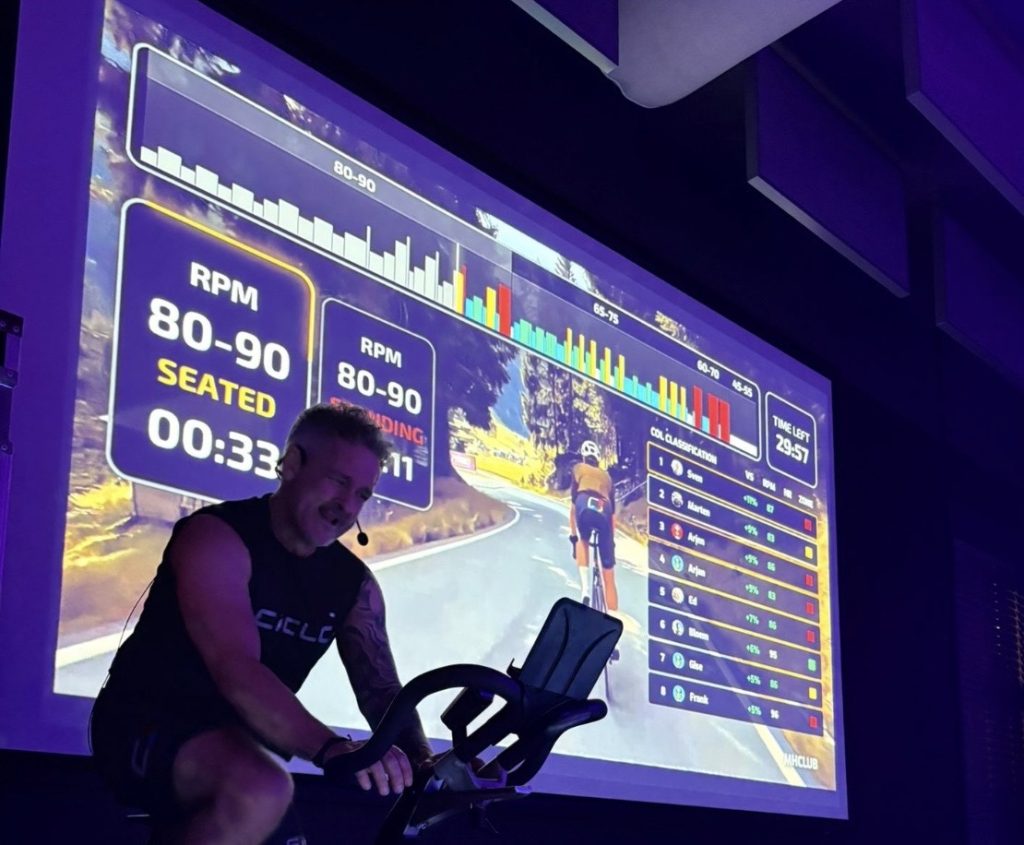
Training zones provide a framework for prescribing exercise intensity relative to an individual’s ability, rather than expecting everyone to perform the same workload.
A highly trained cyclist and a complete beginner can exercise together, following the same interval structure, while working at very different absolute power outputs.
Both can experience an appropriately challenging session.
However, we must be careful not to overinterpret the dementia research. Scientists have not established that a particular cycling zone, interval duration or intensity distribution is uniquely effective at preventing dementia.
What exercise science does tell us is that appropriately prescribed intensity, progression and recovery help people train effectively, safely and consistently.
And consistency is fundamental to achieving long-term health benefits.
Why Indoor Group Cycling Has Such Potential
Indoor group cycling offers something particularly valuable: the opportunity to combine structured exercise with motivation, accessibility and social interaction.
Unlike outdoor cycling, indoor sessions are not affected by traffic, weather, road conditions or terrain.
Participants can control their workload precisely, making it possible for people of very different fitness levels to exercise together.
The group environment also provides motivation, shared experiences and social engagement — all potentially valuable contributors to healthy ageing.
For older adults in particular, a well-designed indoor cycling programme can provide a manageable and repeatable form of cardiovascular exercise.
But the quality of the exercise prescription matters.
And that brings us to one of the most overlooked aspects of modern indoor cycling: the role of the instructor.
A Great Playlist Doesn’t Automatically Make a Great Training Session
Music has always been central to indoor cycling.
It creates atmosphere, encourages participation and makes exercise enjoyable.
There’s absolutely nothing wrong with building a cycling experience around great music. In fact, enjoyment is one of the most important reasons people continue exercising.
However, music alone does not determine the physiological effectiveness of a session.
A class designed entirely around musical changes, without considering exercise intensity, interval duration or recovery, may be highly entertaining but lack a coherent training objective.
A well-qualified instructor should understand not only which track comes next, but also what physiological demand each section of the class places on participants.
For example:
What intensity should riders be working at?
Is the objective aerobic endurance, sustained threshold work or a short high-intensity effort?
How long should that effort last?
A 20-second acceleration produces a very different training stimulus from a sustained four-minute interval.
How much recovery is appropriate?
Recovery isn’t wasted time. It’s an essential component of interval design, influencing the quality of subsequent efforts and the total physiological demand.
Can every rider participate appropriately?
A properly profiled session should allow individuals of different abilities to follow the same structure while exercising at intensities appropriate to their own fitness.
These are fundamental principles of exercise prescription, not simply matters of musical preference.
The Future of Indoor Cycling Should Combine Entertainment With Exercise Science
The most effective indoor cycling experiences don’t need to choose between entertainment and structured training.
They can deliver both.
Music provides rhythm, emotion and motivation. Training zones provide individualised intensity. Intervals create the physiological stimulus. Recovery allows that stimulus to be managed appropriately.
When these elements work together, group cycling becomes more than an enjoyable workout.
It becomes a structured, repeatable and accessible form of exercise that can support long-term cardiovascular fitness, muscular function and healthy ageing.
For instructors, this means developing an understanding of exercise physiology alongside musical programming and motivational skills.
For participants, it means gaining confidence that the effort they’re putting into each session has a clear purpose.
The Bigger Picture: We’re Training for the Years Ahead
Dementia is one of the greatest health challenges facing ageing populations worldwide.
No single form of exercise can guarantee protection, and cycling should never be presented as a cure or proven means of preventing Alzheimer’s disease.
But the growing body of research connecting physical activity, muscular function, cardiovascular health and cognitive ageing offers a powerful reason to remain active throughout life.
Cycling is particularly appealing because it can be adapted to different abilities and continued across many decades.
And indoor group cycling makes that opportunity available to people who may never consider themselves traditional cyclists.
The challenge is to ensure that the sessions we deliver are not only enjoyable, but also intelligently designed.
Because the goal isn’t simply to have stronger legs today. It’s to give ourselves the best possible opportunity to remain physically capable, mentally engaged and independent for as many years as possible.
And that’s a compelling reason to keep pedalling.
—
Scientific references
1. Dougherty et al. (2025). Active Travel Mode and Incident Dementia and Brain Structure. JAMA Network Open. Large UK Biobank study investigating cycling and dementia incidence.
2. Steves et al. (2015). Kicking Back Cognitive Ageing: Leg Power Predicts Cognitive Ageing after Ten Years in Older Female Twins. Gerontology. Longitudinal study of leg power and cognitive ageing.
3. Duggal et al. (2018). Major Features of Immunosenescence, Including Reduced Thymic Output, Are Ameliorated by High Levels of Physical Activity in Adulthood. Aging Cell. Research involving lifelong recreational cyclists.
4. The Lancet Standing Commission (2024). Dementia Prevention, Intervention, and Care: 2024 Report. The Lancet. Review of modifiable dementia risk factors.
5. US POINTER Study (2025). Randomised clinical trial examining structured lifestyle interventions and cognitive outcomes in older adults.