The most successful group exercise formats have rarely succeeded because they discovered a secret movement, magical piece of equipment or soundtrack capable of frightening body fat into submission. They succeeded because—deliberately or otherwise—they found an effective balance between sustainable activity and short periods of genuine physiological challenge.
Consider programmes such as Insanity, BODYPUMP, HYROX and indoor cycling. They look very different, but each alternates between work the body can sustain and moments when it is pushed towards—or beyond—its normal operating level.
This variation matters because an exercise session performed entirely at one comfortable intensity quickly becomes predictable. Once the body becomes capable of meeting that demand, it has little reason to improve further. The participant may continue to burn calories and maintain fitness, but the stimulus for further adaptation gradually diminishes.
Insanity became a global phenomenon partly because it made intensity unmistakable. It combined repeated high-energy movements with limited recovery, driving participants into periods of severe cardiovascular and muscular stress. It certainly wasn’t subtle. Nobody completed an Insanity session and wondered whether they had accidentally attended a mindfulness workshop.
Its weakness was also its strength: the intensity was highly visible, emotionally powerful and capable of producing results, but not always suitable for every participant. High-intensity training becomes less productive when poor technique, excessive impact or insufficient recovery turns controlled overload into survival.
BODYPUMP approaches the problem differently. The resistance is generally moderate, but the repetition count is high. A participant may begin a track feeling suspiciously comfortable, only to discover two minutes later that the barbell has apparently doubled in weight.
The load has not changed; fatigue has.
As the working muscle tires, the body must recruit more fibres to maintain the movement. When performed with appropriate resistance and good technique, the final repetitions can bring the muscle close to technical failure. This creates a meaningful stimulus for muscular endurance and, in some circumstances, growth. The effective element is not simply lifting a light bar repeatedly—it is selecting enough resistance for those repetitions to become genuinely challenging.
HYROX uses another version of the same formula. Periods of relatively steady running are interrupted by demanding functional stations: sled pushes, rowing, lunges, carries and wall balls. The running provides sustained aerobic work, while the stations produce muscular fatigue and repeated excursions above threshold.
The participant must then continue exercising while carrying that fatigue. This creates a strong combination of aerobic conditioning, strength endurance and psychological resilience. It also explains why HYROX feels manageable when described one exercise at a time and considerably less reasonable when those exercises are assembled into an event.
Indoor cycling may provide the most controllable version of this training balance.
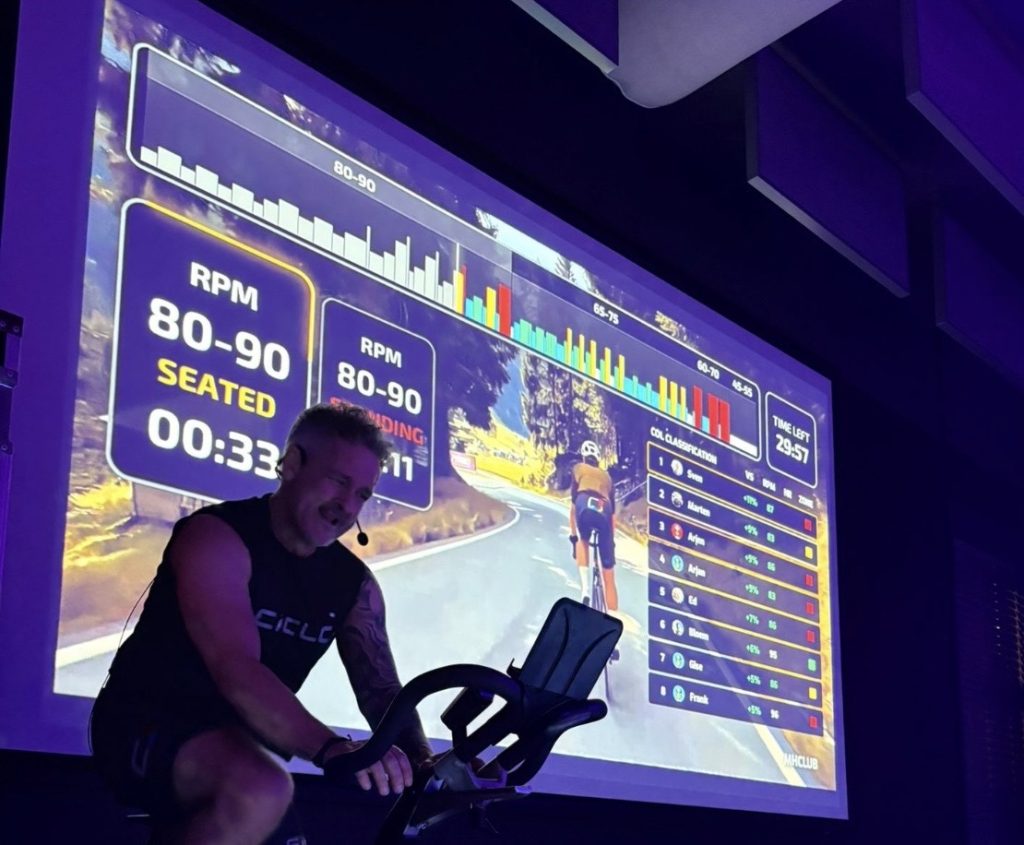
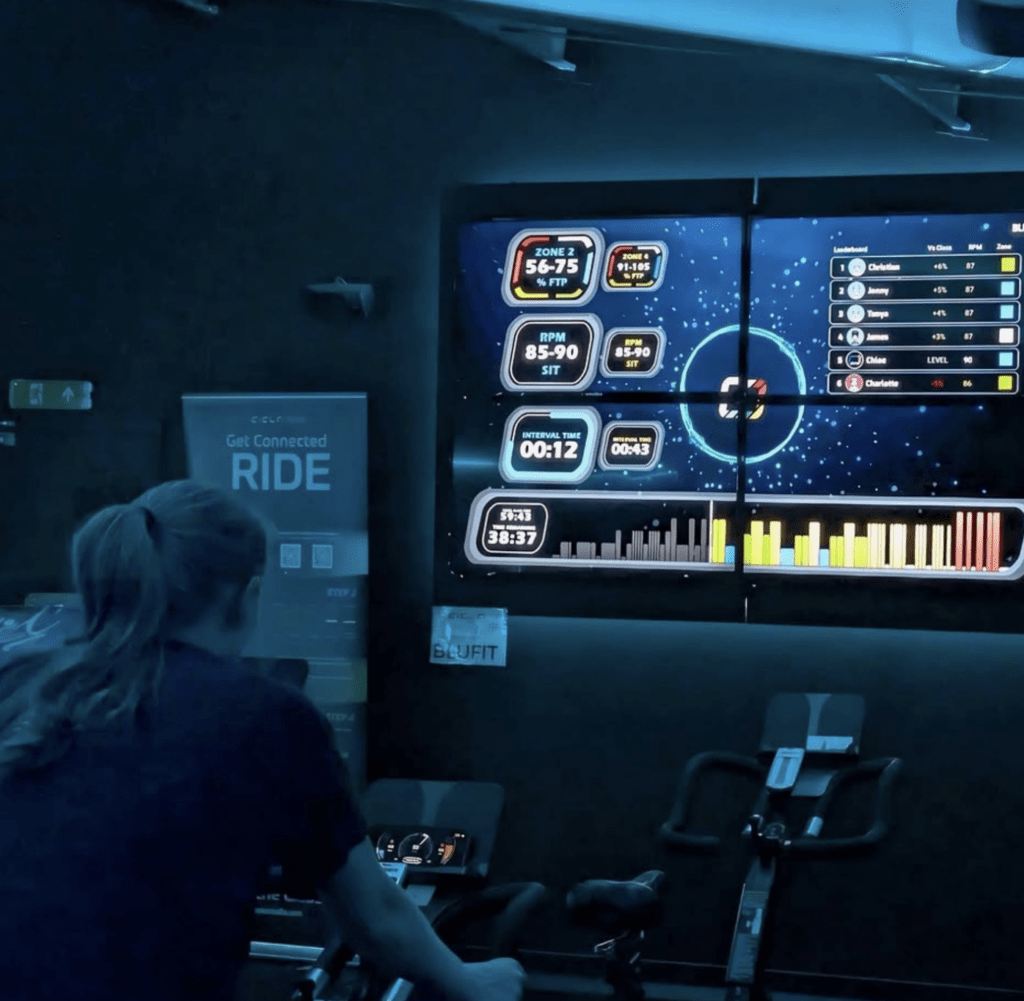
A properly structured cycling class can contain substantial periods of steady aerobic work without impact loading, interspersed with accurately prescribed threshold and supra-threshold intervals. Riders can work together while resistance, power and intensity remain individual. Unlike many high-impact formats, intensity can be increased without jumping, landing or asking everybody’s knees to participate in a group experiment.
The steady sections are essential. They develop aerobic efficiency, allow useful training volume and provide active recovery between harder efforts. But the intervals create the strongest signal for improvement.
A rider working above functional threshold cannot remain there indefinitely. That is the point. The interval deliberately asks for more power than the aerobic system can sustainably provide. Oxygen uptake rises, faster muscle fibres are recruited, lactate production increases and the body is forced to manage a level of metabolic disturbance beyond its comfortable steady state.
Recovery then allows the rider to repeat the effort with sufficient quality.
This relationship between work and recovery is the heart of intelligent interval training. If every interval is too easy, the required stimulus never arrives. If every interval is maximal and recovery is inadequate, power collapses and the session becomes an increasingly inaccurate demonstration of suffering.
The correct dose lies between the two.
For most participants, only a relatively small proportion of the class needs to be genuinely severe. One or two carefully constructed red-zone sections can be enough when supported by aerobic riding, progressive preparation and adequate recovery. The objective is not to spend the entire class above threshold; it is to enter that territory with purpose and leave it before movement quality disintegrates.
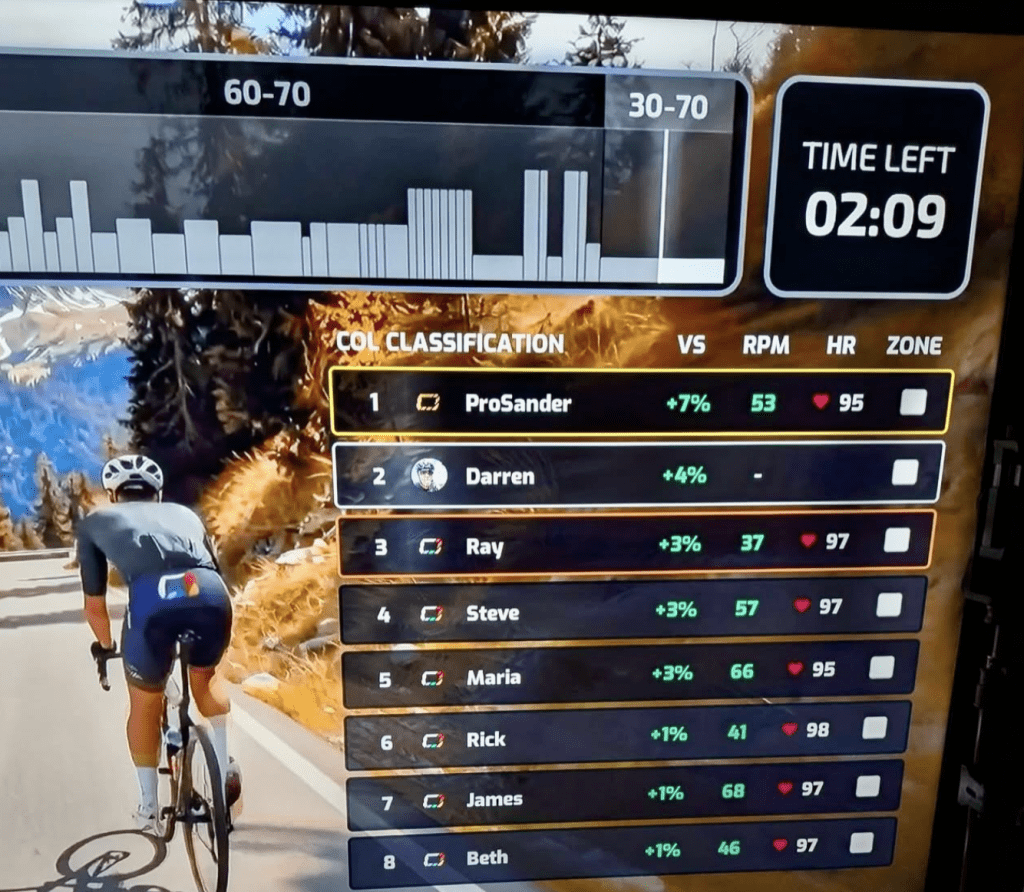
This is where personalised power-based cycling becomes especially valuable. A generic instruction such as “work harder” means something different to every rider. One person may still be below threshold while another is approaching collapse. When effort is prescribed relative to individual capacity, riders of very different abilities can experience the same physiological challenge.
That is the real achievement of excellent group exercise. It makes individual overload possible within a shared experience.
Music, coaching and collective energy encourage people to access intensities they might avoid when training alone. The group supplies motivation, but the programme must supply intelligence. Entertainment gets people into the room; appropriate overload gives them a reason to return with a stronger body.
Successful group exercise does not abandon steady-state training, nor does it worship intensity for its own sake. It combines a broad foundation of sustainable movement with brief, controlled periods of serious work.
The steady-state activity builds the engine. The supra-threshold intervals ask the engine to become bigger.
And occasionally, with the correct music and several other people suffering nearby, the human body can be persuaded to do exactly that.