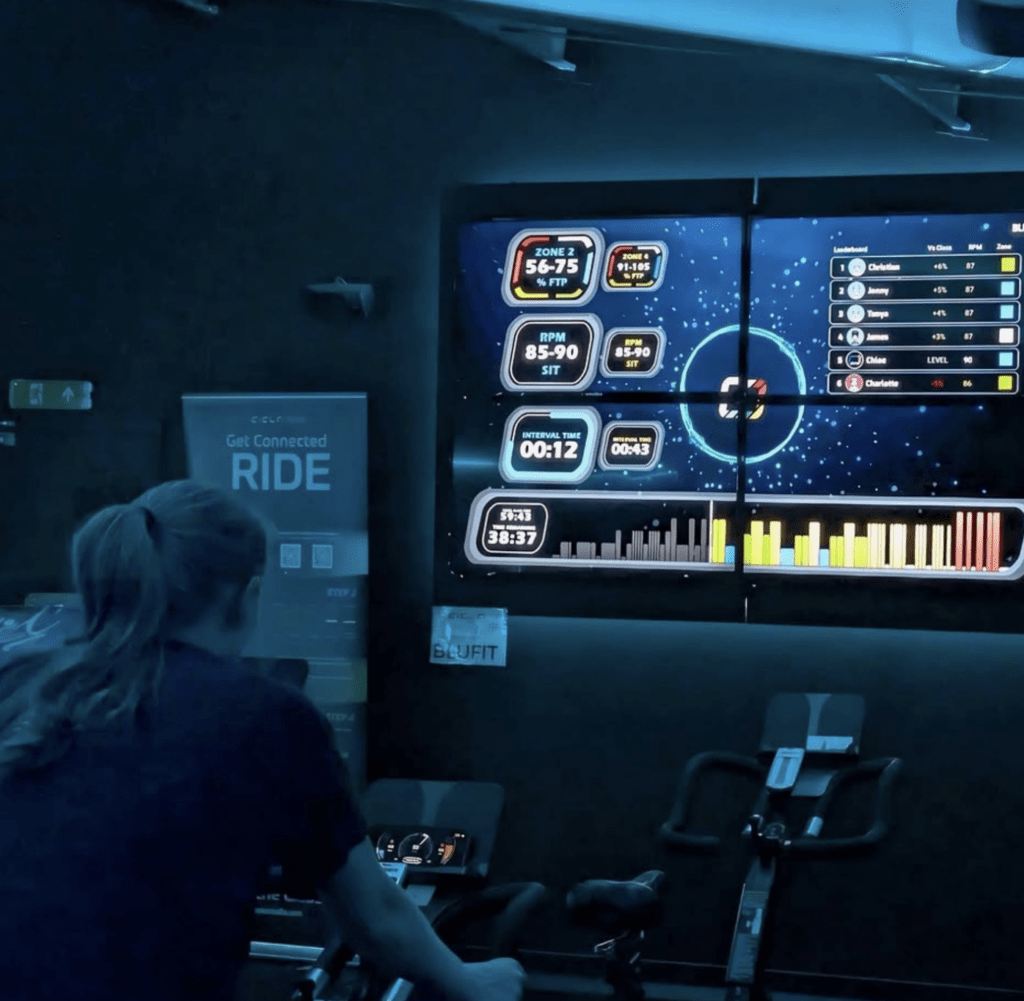
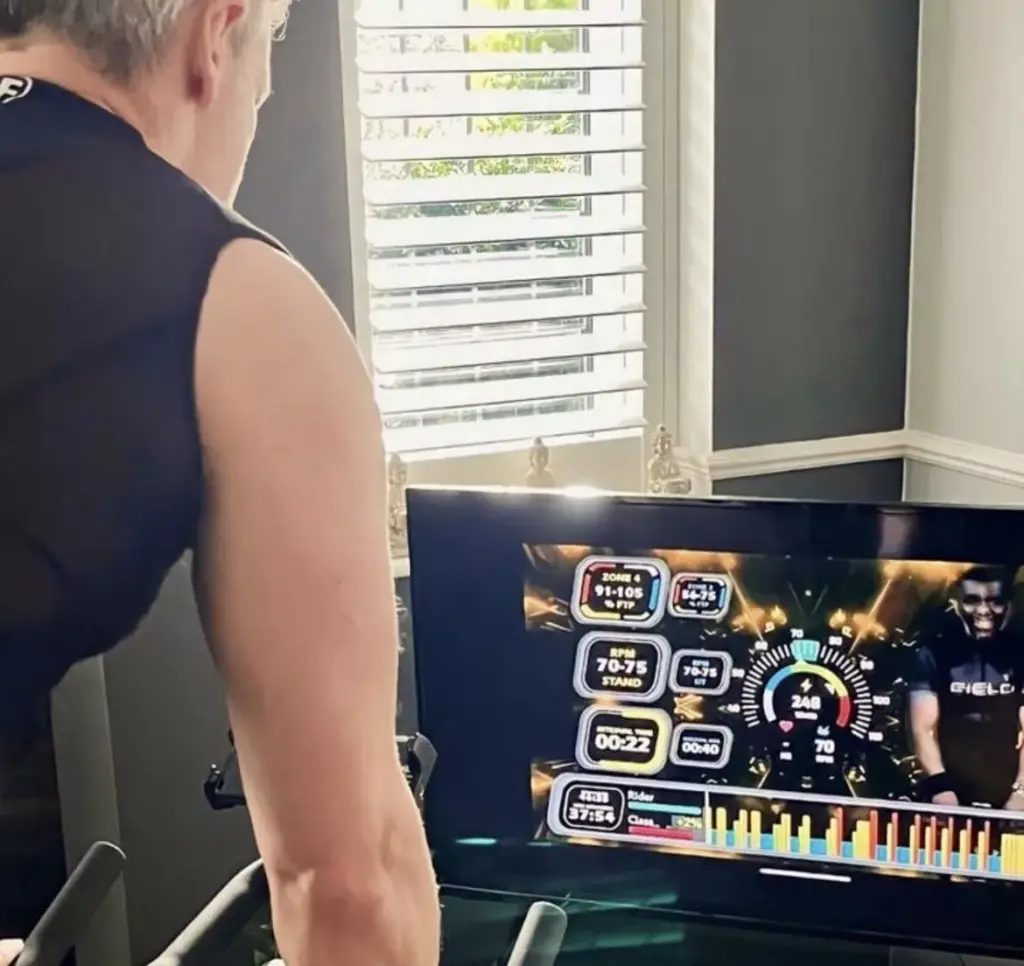
For decades, indoor cycling has been one of the most popular group exercise formats in the world. Millions of people ride every week in gyms, boutique studios, and at home. Yet despite this enormous participation, indoor cycling has historically lacked something fundamental: a consistent, standardized way to measure performance and physiological impact.
Most indoor cycling classes still rely on subjective cues such as “feel the burn,” “push harder,” or “ride to the beat.” While motivating and enjoyable, these approaches rarely provide meaningful insight into how hard someone is actually working or how their body is adapting to training over time.
At Ciclo, we believe indoor cycling deserves something better.
Our ambition is clear: to establish the global standard for indoor cycling performance data. Through a combination of structured training design, power-based metrics, and recovery analysis, Ciclo is building a system that turns every class into a meaningful physiological dataset. In doing so, we aim to elevate indoor cycling from a purely fitness experience to a credible performance and health monitoring platform.
The Evolution of Fitness Data
The world of fitness data is changing rapidly. For many years, activity tracking focused on simple metrics:
Steps taken
Calories burned
Exercise duration
While useful for encouraging activity, these numbers tell us very little about actual physiological fitness or training effectiveness.
The next generation of health technology is shifting toward measuring performance capacity and recovery. Major platforms such as Apple Health and Google Health Connect are increasingly integrating advanced data signals such as:
Heart rate variability
Sleep recovery
Training load
Cycling power
Functional threshold power (FTP)
These metrics provide insight into how the body responds to training, adapts to stress, and recovers from effort.
However, most fitness data today is unstructured and inconsistent. Outdoor activities vary widely in terrain, weather, and pacing. Even within gyms, class formats and intensity levels often differ dramatically between instructors.
For data to become truly meaningful at scale, training environments must produce repeatable, standardized physiological signals.
This is where Ciclo is different.
Why Cycling Power Matters
Cycling power measurement revolutionized endurance training because it provides a direct measure of mechanical output. Unlike calories or heart rate alone, power shows exactly how much work an athlete is performing.
Because power is measured directly, it allows for consistent comparisons across sessions, riders, and environments.
Indoor cycling platforms that capture power data can therefore generate high-quality physiological insights. But raw power numbers alone are not enough. To make sense of training stress and adaptation, those numbers must be translated into interpretable metrics.
Ciclo solves this challenge through two proprietary indicators:
Ciclozone Output Level (COL%)
and
Ciclozone Recovery Level (CRL%)
Introducing COL%: The Measure of Training Stress
Every Ciclo session measures the physiological stress placed on riders using Ciclozone Output Level (COL%).
COL% represents the overall intensity of a session relative to a rider’s physiological capability. By analyzing power output, cadence ranges, interval duration, and session structure, Ciclo calculates a normalized intensity score for both the class and each individual participant.
Sessions typically fall within a structured range:
COL%
Training Focus
60–65
Aerobic conditioning
65–75
Endurance development
75–85
Threshold training
85–90
High-intensity performance
This scale creates a consistent language for training stress. Riders know exactly how demanding a session is, and instructors can design balanced programs that respect physiological limits.
Instead of guessing intensity, riders and coaches can rely on objective performance data.
Introducing CRL%: Measuring Recovery Response
Training stress alone does not tell the whole story. Adaptation happens during recovery.
That is why Ciclo also measures Ciclozone Recovery Level (CRL%), a recovery indicator calculated during the final low-intensity phase of every class.
CRL% analyzes heart rate recovery dynamics in a standardized low-effort zone. The result is a recovery score expressed as a percentage relative to expected physiological norms based on age, gender, and fitness level.
100% represents average recovery capability
Above 100% indicates excellent recovery response
Below 100% suggests recovery may need improvement
This metric allows riders to understand not only how hard they trained, but how well their body is responding to that training.
Together, COL% and CRL% capture the two most important elements of physiological development:
Training stimulus and recovery response.
Turning Every Class Into a Data Point
Traditional fitness classes focus primarily on entertainment and motivation. While those elements remain important, Ciclo goes further by turning each session into a structured performance dataset.
Every Ciclo class contains:
Defined cadence ranges
Structured intensity zones
Interval timing
Power measurement
Recovery analysis
This structure creates repeatable training stimuli, allowing riders to track progress over time.
When thousands of riders participate across studios worldwide, the result is a growing database of standardized performance information. This dataset has the potential to reveal powerful insights about:
Training adaptation
Recovery efficiency
Fitness progression across age groups
Population-level performance trends
Aligning With the Future of Health Technology
As wearable technology and health platforms evolve, the value of high-quality fitness data will continue to grow.
Companies like Apple and Google are building systems designed to interpret physiological signals from millions of users. These systems aim to help individuals understand their fitness readiness, recovery status, and long-term health trajectory.
However, their algorithms depend on reliable training inputs.
Ciclo provides exactly that.
By generating structured, repeatable cycling sessions with standardized performance metrics, Ciclo has the potential to contribute meaningful training data to these larger ecosystems.
In the future, a Ciclo session could help inform broader health insights such as:
Training readiness
Cardiovascular fitness trends
Recovery capacity
Long-term performance adaptation
This integration represents a powerful opportunity for indoor cycling to play a meaningful role in the broader health technology landscape.
Why Ciclo Is Unique
What makes Ciclo truly special is the way it bridges group fitness, performance science, and digital health.
Unlike many indoor cycling systems, Ciclo does not rely solely on entertainment or virtual environments. Instead, it focuses on creating a structured physiological training environment that benefits riders of all abilities.
Ciclo’s system combines:
Power-based performance measurement
Structured class design
Instructor education
Recovery analysis
Scalable digital data infrastructure
The result is a platform that serves both fitness enthusiasts and serious performance-minded riders, while also generating valuable insights for the broader health ecosystem.
Building the Global Standard
The ultimate ambition of Ciclo is simple but powerful:
to make COL% and CRL% recognized industry metrics for indoor cycling performance.
Just as FTP became the global standard for measuring cycling capability, Ciclo aims to create a common language for understanding training stress and recovery within group cycling environments.
When riders, instructors, studios, and technology platforms all speak the same performance language, the entire industry benefits.
Riders gain clearer insight into their progress.
Instructors gain tools for designing smarter classes.
Studios gain credibility as performance-driven training environments.
And the wider health technology ecosystem gains access to valuable structured training data.
A New Era for Indoor Cycling
Indoor cycling has always been one of the most powerful ways to train cardiovascular fitness. With the right technology and structure, it can also become one of the most powerful ways to measure and understand human performance.
Ciclo is proud to be taking the first steps toward that future.
By combining structured training design with innovative performance metrics like COL% and CRL%, we are working to elevate indoor cycling into a data-driven discipline that benefits riders, studios, and the global health community alike.
The journey toward establishing a global standard has only just begun—but the potential impact is enormous.